
When specifying parts to be zinc nickel coated it is just as important for the supplier to provide the correct paperwork as it is for them to apply the correct coating. In this article we outline the main standards for zinc nickel plating and what you need to look out for.
Specification Versus Certification Explained
A specification for coating is a set of technical requirements which the coating has to fulfil, e.g. the alloying degree, the coating thickness, corrosion resistance. The corresponding certification, however, is a confirmation for a certain delivery lot or even for a supplier that he or she meets the above-mentioned requirements for coating and corresponding proof by means of test reports. Thus it has to be distinguished from the specification. A supplier might be certified as meeting the requirements of ISO 9001 for a good quality management system and nevertheless not fulfil the coating thickness or corrosion protection class required for a specific part.
Core Material Standards To Know
The main specification for zinc nickel plating is ASTM B841 (USA) and ISO 19598 (Europe). These specifications detail the correct alloy composition, the coating thickness and various tests to check the coating for quality. For Aerospace work, the specifications are tighter and are detailed in SAE AMS2482 (Base alloy) and SAE AMS2481 (Plating). It is essential that the drawing specifies a correct coating standard (as specified above) and not just “zinc nickel plate”. The difference in specification could mean that the supplier is following the minimal requirements of the coating to ensure corrosion protection, or they are following strict guidelines for a very specialised coating.
Proving Corrosion Resistance Through Salt Spray
Neutral Salt Spray Testing measures corrosion resistance by placing coated panels in a salt fog chamber. At set intervals the panels are removed and inspected for red rust, i.e. corrosion of the underlying steel. The corrosion data is expressed in hours to red rust, with longer figures denoting a better coating, top-coat or combination of the two. White corrosion to the zinc alloy is reported differently from red rust to the substrate and must be checked when reviewing test reports.
Why OEM Approval Lists Matter
Many automotive manufacturers such as GM, Ford and the VW/PSA group have their own approved processes that are on top of the base standard such as ASTM or ISO. These process lists can be very strict and in some cases require additional testing such as exposure to specific fluids, stone chip testing and thermal cycling. The terms of the OEM approved process list must be named on the drawing and strictly adhered to. If an OEM approval is required then this must be clearly stated on the drawing.
There is more on Zinc Nickel Plating at Poeton Zinc Nickel Plating.
The Move Away From Hexavalent Chromium
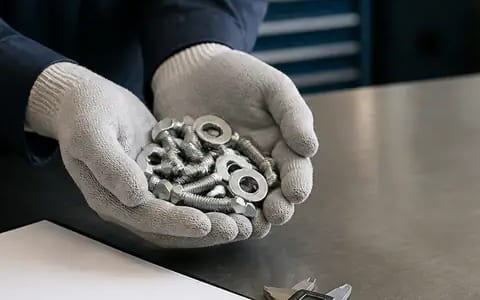
Older zinc plating processes used hexavalent chromium passivates and sealers. The use of such processes is now highly restricted under the REACH chemicals regulation. In addition to this, HSE guidance states that hexavalent chromium is hazardous to health and so most zinc/nickel plating processes now use trivalent chromium passivates with organic or inorganic top-coats. These processes can achieve the same corrosion resistance as the older hexavalent processes, but only if the passivate and top-coat are correctly matched to the base coating in order to achieve the required number of corrosion hours. It is therefore essential to ask suppliers what process they are using and whether this has been tested as a complete system i.e. including the top-coat.
What ISO 9001 Adds On Top
Just because a supplier is certified to ISO 9001 does not mean that they have the ability to produce a coating of the correct thickness or with the correct corrosion resistance. As mentioned previously the coating specification must be referenced on the purchase order/drawing and the supplier’s certification to ISO 9001 must be confirmed. For higher value parts or for aerospace/safety critical components it is also recommended to check for process specific accreditation (e.g. Nadcap for aerospace) which audits the supplier’s process against the relevant AMS specification. Even if a supplier is certified to ISO 9001 it is worth checking whether the specific process has been independently audited against the relevant coating specification and not just against their general management system.
Reading A Certificate Of Conformity Properly
The certificate of conformity must state the specific Standard and Class required. This must be referenced against the coating specification ie. ISO 19598 Fe/Zn8/A/T2 as opposed to simply ‘zinc nickel to spec’. The thickness band must also comply with your coating specification, not just the average value of one sample. You must also check the method of corrosion test used i.e. whether test has been carried out to ASTM B117 ‘Salt Spray (Fog) Testing’ or to ISO 9227 ‘Corrosion tests to artificial atmospheres – General principles’. The number of samples used to test one batch must also be referenced, i.e. 1 coupon as opposed to multiple samples from the batch. Finally check if the testing laboratory is UKAS accredited or not. In house testing with no third party verification carries little weight when a dispute arises.
Wording The Drawing Note Correctly
Almost all the problems that arise with zinc nickel plated parts occur because the drawing note has not been worded correctly. This is a simple matter of listing the required coating specification (i.e. ISO 19598 or ASTM B841) coating class (i.e. alloy type) coating thickness (i.e. in microns) corrosion requirement (i.e. corrosion class or hours in neutral salt spray test) and the type of passivate used. An example of how this could be written is: “Zinc nickel plate to ISO 19598, Fe/Zn12/A/T3 coating, 8-12 microns thick. Corrosion classification or minimum hours in neutral salt spray test to achieve red rust of substrate as specified in ISO 9227. Trivalent chromium passivate to be used as a coating.”
Specifying the appropriate standard, class and corrosion requirement on your drawing will save much time and expense in preventing unnecessary returns against which you will have to pay for re-work.
Related posts:

Thinking of Starting a Screen Printing Business?

Best Packaging Equipment for Small Businesses in 2024: A Comprehensive Guide

How to start a home business Personal Chef

Maximizing Efficiency and Savings: How Modern Fleet Cards Transform Business Operations

Homemade pastry: How to start a cupcake business?

What are some workers’ rights?

Create memorable events for your small business