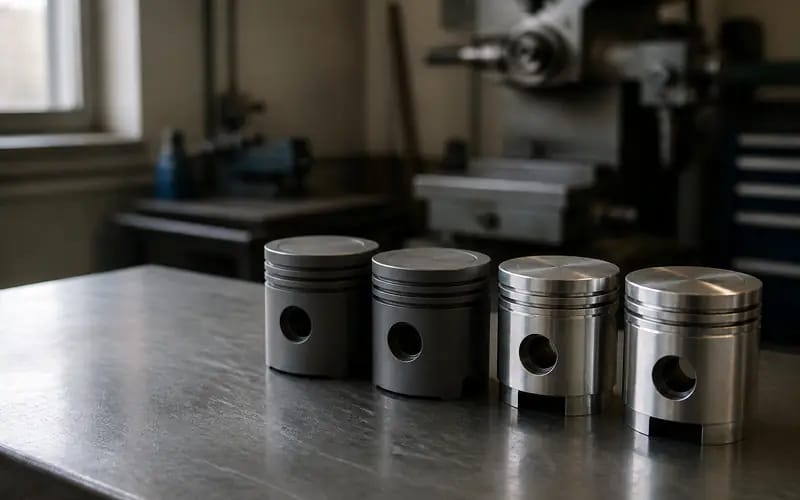
An engineer has a datasheet describing a proprietary composite coating laid down by a specialist as well as a datasheet for a ‘standard’ plating process. Unfortunately both look very good and the engineer has no easy way of making a comparison. He needs to read this article describing demand for the special coatings offered by Poeton, makers of Apticote coatings. It’s worth reading Punchline Gloucester’s coverage of Poeton’s Apticote coatings in full.
My view is that Apticote coatings deserve to be tested against ‘off the shelf’ coatings and vice versa.
What a proprietary coating is for
You only specify a proprietary coating because a standard process leaves a ‘gap’ of some sort – be it sliding surfaces which require reduced friction etc. This is a legitimate area for a proprietary composite coating and Poeton’s Apticote is one such coating for wear and friction problems, as covered in the feature. However the gap has to exist within your part – the information within a datasheet cannot inform you of this.
Demand and specification
The demand for Apticote coatings across aerospace, defence and automotive applications as detailed in the feature, reflects how well this type of proprietary coating addresses wear and friction problems. The engineering drawing must then name the coating specifically. This must be a consideration that is recognised by the engineer specifying coatings.
How to compare coatings fairly
Surface treatment methods need to be tested on the same substrate, pre-treatment and test method. Wear and friction tests need to be run at the same load, speed, lubrication and against the same counterface. The thickness and initial surface roughness of the coating under test can have as great an influence on the results as the coating itself.
All the special processes at Poeton’s new Polish plant are to be Nadcap approved – special processes as used in aerospace.
Sourcing and specification trade-offs
If a proprietary process is chosen then that can be specified on the drawing. This gives the drawing a clearly defined coating. There may also be licensing conditions which need to be adhered to. A standard process is described in published specifications and so easily compared between suppliers to test for sourcing flexibility.
Test it on your part
Coupon testing is fine but nothing beats a test on the actual part. Provide both coatings with the relevant geometry and test them under the relevant loading with the appropriate lubrication. Back at your desk the two datasheets cease to be rivals when both coatings have been tested on your part – the one that survives gets to go on your drawing.
Related posts:

Strategies to Boost Your Property’s Market Value
4 types of warehouse storage systems

Small businesses face a number of logistical challenges

The Ultimate Guide to Outsourcing Accounting Services

How to Prevent False Alarms in Northamptonshire

THE BEST BUSINESSES TO START AT CHRISTMAS DAY

What Must an Entrepreneur Assume When Starting a Business?