It’s worth reading Punchline Gloucester’s coverage of James Poeton’s career path in full.
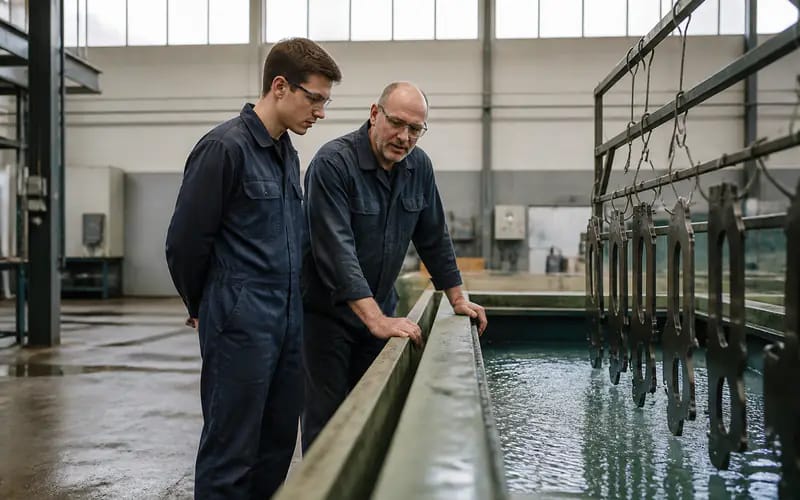
A graduate joins a surface treatment process lab as a new employee. His first week is spent observing the processing of parts in tanks around the lab and learning why a part that looked to be OK to process on Monday is rejected on Thursday. The new graduate has not yet started to learn about customers of the company.
That’s a very sensible route for smaller engineering companies to be taking.
A graduate’s first week in a process lab
The feature discusses in detail the structured training path of James Poeton, the new managing director of Poeton Industries, a surface treatment specialist, who returned to the group in 2020 via the group management training program and became Commercial Director in 2022.
He worked in Poeton’s laboratory while at school, spent ten years in senior technology sales roles and then returned to the company via the group management training program in 2020, becoming commercial director in 2022.
Why the feature’s route is sensible
However the senior technology sales person also brings considerable experience of understanding customers’ needs and Poeton is a leader in surface treatments that help engineers to get more out of conventional materials. A structured training route is more important than a CV full of qualifications, as although in time a new graduate will learn the specification language of a particular industry, it will take them some time to get to grips with.
Skill shortages have eased but remain
The pressure in the workforce of skills-shortage vacancies has dropped. DfE’s Employer Skills Survey 2024 reports that 27% of all current UK vacancies are skill-shortage vacancies. This has decreased from 36% in 2022, but remains higher than the 22% reported in 2017.
While engineering and manufacturing apprenticeship starts have decreased by 42% since the introduction of the Apprenticeship Levy, 68% of manufacturers have recruited an apprentice in the last three years. Make UK’s apprenticeships and skills asks sets this out. There are still engineering and manufacturing apprenticeship vacancies available and employers are looking for ways to recruit for them.
What a training programme should include
On training & development – the key elements that I would look to include in any training program are: 1) rotational training between the lab, production & quality functions to gain a broad understanding of the overall business. A commercial person who has spent time in the production environment will understand the reasons behind delayed lead times. 2) shadowing of customer calls to gain an understanding of how technical requirements are communicated and translated.
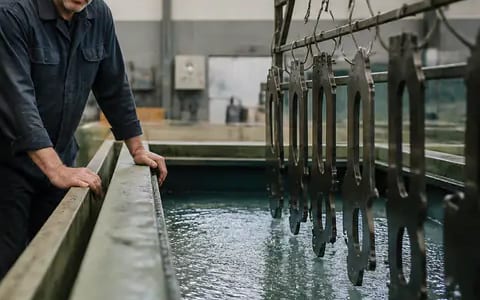
Let them shadow sales meetings and listen to the way technical requirements are actually described to customers by your sales team. And, finally, take them down to the shop floor and watch how a part is racked and masked for hard anodising – it’s all done by hand and you can’t learn that from a datasheet.
Where this route leaves smaller firms
Outside experience, then internal training, is a sensible answer to a shortage that has eased without disappearing. In terms of implementing this in your own small engineering firm, the essential components of such a structured development plan would include a written rotation of roles and departments, the named contact within each department and the time scale for instance 12-18 months prior to the graduate taking on a commercial or management role.
Even although the skills shortage has decreased somewhat, it is by no means resolved and need to be addressed. Taking an outside person on experiential training and then putting them on internal training programs is a very sensible way to tackle this. Back in the lab for a start!
Related posts:

11 Crucial tactics to create a successful business

Why your business needs an effective courier

Navigating the Cloud Frontier: Overcoming Retail Industry Challenges in Cloud Migration

How to Create a Reception Area that Gives a Good Impression to Your Visitors

How to Design a Simple Food Menu for Your Restaurant

Renting A Van For Business Use

How to Start a Truck Dispatching Business: A Step-by-Step Guide