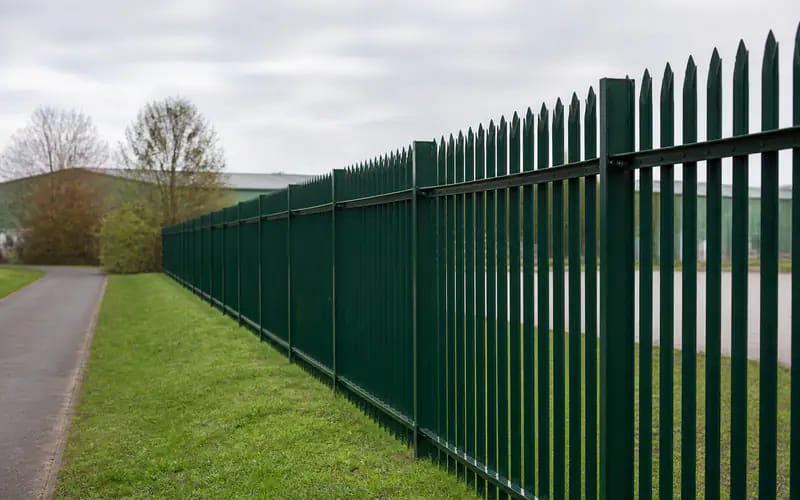
This guide provides general information about Planning Permission for Palisade Fencing. Before you consider the height and line of your Palisade Fence, you should make sure you know the rules concerning the installation of fencing. The information provided applies to England and Wales and is general in nature and should not be used to decide a specific course of action without seeking professional advice first.
Check The 2 Metre Rule First
Fencing generally falls within the permitted development rights for fences, walls and gates up to 2m high in England and Wales. However, fencing within 2m of a highway (used by vehicles) is restricted to 1m high (measured from ground level on the higher side of a sloping boundary).
Pointed Tops Don’t Change The Height Rule
This type of fence is often chosen as it has a security deterrent at the top in the form of pointed or D-shaped tops. But these also have to be included in the overall height of the fence. So a 2.1m high run of palisade with 100mm spiked tops is considered to be a 2.1m high fence by planning control and would have to comply with the 2m maximum height allowed under permitted development. If you need to go higher than this to achieve your security requirements then you will need to apply for planning permission.
Conservation Areas Need Extra Care
Conservation Areas such as those near listed buildings or within designated Areas such as National Parks and Areas of Outstanding Natural Beauty have restrictions placed upon fencing that exceed normal permitted development limits. An Article 4 Direction can also be applied by a council to a whole street or neighbourhood and restrict normal permitted development even where fencing is less than 1m high and would normally not require application for planning permission. Check the property’s specific designation and contact the local planning authority to see if any restrictions apply.
Commercial And Industrial Sites Often Need Full Applications
While commercial sites are usually outside of the domestic permitted development rules, even fencing around yards, depots and industrial units can require planning permission. This is particularly the case where the proposed fence is over 2m high, or part of a larger security measure including gates, lighting columns and CCTV masts. Furthermore, if a site has previously been subject to planning permission, there may be specific conditions imposed in relation to boundary treatment which restrict the proposed fence even if within height limits for permitted development. See also Direct Fencing.
Confirm Who Owns The Boundary
It’s also worth checking who owns the boundary before you start putting up the fence. Often the title deeds will show a T-mark where the boundary follows the line of a old hedge or other feature but with older properties and especially with previously informal boundaries it’s not always clear. If in doubt it’s best to get a written agreement with your neighbour before starting and if necessary a chartered surveyor can assist with establishing the exact line of the boundary before you start.
Installers Work To Your Line, Not Your Dispute
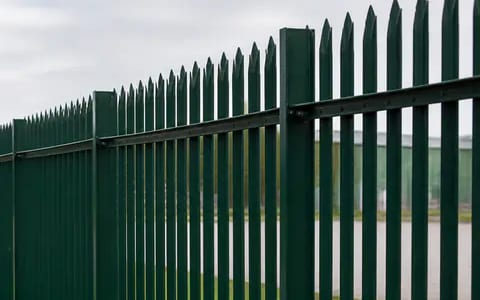
A good quality fencing contractor will install the fencing along the line that you state; this will be measured out prior to installation. However, the contractor has no standing in any dispute over the boundary between properties and you should try to sort out the boundary before placing an order for fencing. Many disputes over fencing occur because the fencing contractor starts work before a conversation has taken place with the neighbour.
What Happens Without The Right Consent
Failure to apply for Planning Permission for the erection of your fence may result in an Enforcement Notice requiring you to reduce the height, alter the design or remove the fence. In some instances it is possible to apply for retrospective Planning Permission and this would be considered on its merits; however failure could result in you being required to dismantle the fence at your own expense. Additionally, any enforcement action would be recorded against the property and could affect future sale of the property.
Ask Before You Order
Contacting your local planning authority by phone to establish whether planning permission is required for the proposed fencing is the cheapest and most immediate way of establishing whether planning permission is required for proposed fencing. In most cases a planner will be able to answer such questions free of charge, and a number of local authorities also offer a pre-application consultation service for more complex proposals, such as commercial proposals or those affecting a conservation area.
Getting the height of your fence and the boundary line right first time will make for an easier installation and a single phone call to check planning will save you so much time and money in the long run.
Related posts:

10 Booming businesses that are stomping!

Step-By-Step: What to Expect During Professional Oven Installation

5 Essential things to have results in your business

How Custom Fabricators Enhance Product Development

Types of Cranes

5 Factors To Consider When Taking Over An Existing Business

When is it advisable to have a declaration of trust?