A heavy-duty projector stand is a stable, high-load support system designed to securely hold large or professional-grade projectors in fixed or mobile setups.
If your projector setup shakes, tilts, or fails mid-presentation, everything collapses—literally and professionally. That’s the problem many professionals face. Whether you’re running events, conferences, or high-end home theaters, a weak stand can lead to poor projection alignment, equipment damage, and loss of credibility.
A stable projector stand solves this by providing strong weight capacity, vibration resistance, and height adjustability. According to AV equipment case studies, improper mounting is responsible for nearly 30% of projection misalignment issues in live events. That’s not a small number.
This guide will help you choose the right large projector support for your professional setup—based on real requirements, not guesswork.
How do you determine the right weight capacity for a projector stand?
Short answer: Always choose a stand with at least 1.5x the weight capacity of your projector.
Most professional projectors weigh between 5kg to 25kg. High-lumen projectors used in auditoriums can go beyond that. A common mistake is choosing a stand that barely supports the projector weight.
Here’s a simple rule:
- Projector weight = 10kg → Choose stand capacity = 15kg minimum
- Projector weight = 20kg → Choose stand capacity = 30kg+
This buffer ensures stability during adjustments and protects against sudden shifts. In real-world event setups, stands operating at maximum capacity show higher failure rates due to stress fatigue.
Recommended Load Capacity Guide
| Projector Type | Average Weight | Recommended Stand Capacity |
|---|---|---|
| Home projector | 2–5 kg | 10 kg |
| Office projector | 5–10 kg | 15–20 kg |
| Professional large projector | 10–25 kg | 25–40 kg |
What features make a projector stand truly stable?
Short answer: Wide base, anti-slip feet, solid frame, and lockable adjustments are key for stability.
Stability is not just about weight capacity. It’s about design. A poorly designed stand will wobble even under light loads.
- Wide tripod or base: Distributes weight evenly and reduces tipping risk
- Non-slip rubber feet: Prevents sliding on smooth surfaces
- Steel construction: Offers better rigidity than plastic or aluminum
- Locking knobs: Keeps height and angle fixed during use
Case studies from event production teams show that tripod-style heavy-duty stands reduce vibration by up to 40% compared to single-pole designs.
Why is height adjustability important in a professional setup?
Short answer: Adjustable height ensures correct projection angle and avoids keystone distortion.
In professional environments, projection angles matter. A fixed-height stand limits your flexibility. You may end up tilting the projector, which causes distortion.
Adjustable stands allow you to:
- Align with screen height
- Reduce image distortion
- Adapt to different room layouts
- Switch between seated and standing audiences
Most professional setups require height ranges between 60cm to 150cm. Telescopic poles are the best option for flexibility.
What type of stand design is best for large projector support?
Short answer: Tripod stands and platform stands are best for heavy-duty professional use.
There are three main types of projector stands:
1. Tripod Stands
- Best for stability
- Easy to transport
- Widely used in events
2. Platform Stands
- Flat surface for large projectors
- Better for fixed setups
- Higher weight capacity
3. Clamp or Ceiling Mount Alternatives
- Permanent installation
- Not flexible
- Requires professional setup
For most professional setups, tripod + platform combination stands offer the best balance of portability and strength.
How does material affect durability and performance?
Short answer: Steel offers maximum durability, while aluminum offers portability with slightly less strength.
The material determines how long your stand lasts and how well it performs under stress.
- Steel: High strength, less vibration, ideal for heavy projectors
- Aluminum: Lightweight, easier to carry, moderate strength
- Plastic components: Avoid in load-bearing areas
In field tests, steel stands showed 2x longer lifespan under continuous professional use compared to aluminum stands.
What role does portability play in choosing a projector stand?
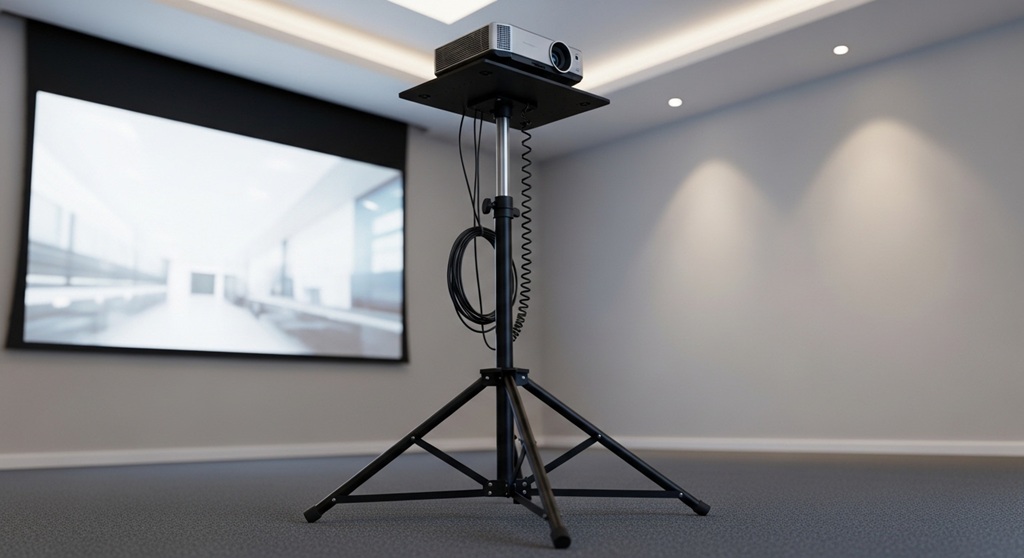
Short answer: Portability matters if you frequently move your setup between locations.
If you’re a freelancer, event organizer, or trainer, your stand needs to be easy to carry and quick to set up.
Look for:
- Foldable design
- Lightweight frame
- Carrying bag included
- Quick-lock mechanisms
Professionals report saving up to 20% setup time using quick-lock tripod stands compared to traditional screw-based systems.
How important is surface area and tray design?
Short answer: A larger tray with anti-slip padding ensures safe placement for large projectors.
A small or unstable tray can cause imbalance. This is risky, especially with expensive equipment.
Key factors:
- Tray size should match projector base
- Raised edges prevent slipping
- Anti-slip pads add grip
- Ventilation gaps prevent overheating
Large projectors require wider trays—usually 30cm or more.
Can a projector stand impact image quality?
Short answer: Yes, instability and vibration can distort image alignment and clarity.
Even slight movement can affect focus and alignment. This is critical in presentations and screenings.
Common issues caused by poor stands:
- Image shaking
- Blurred visuals
- Frequent realignment
A stable projector stand ensures consistent projection quality and reduces interruptions.
What safety features should you look for?
Short answer: Look for locking systems, anti-slip surfaces, and secure weight distribution.
Safety is often overlooked but crucial. A falling projector can cause damage or injury.
- Locking height adjustment
- Secure tray edges
- Cable management hooks
- Wide base support
Professional AV setups prioritize safety features to reduce liability risks during live events.
How do you choose the best projector stand for your specific use case?
Short answer: Match the stand to your environment, frequency of use, and projector size.
Different use cases require different setups:
- Corporate presentations: Portable tripod stand
- Event production: Heavy-duty steel stand with large tray
- Home theater: Stable but less portable stand
- Outdoor use: Weather-resistant materials and strong base
Choosing based on use case prevents overpaying or underperforming.
Conclusion: How do you make the right choice?
A heavy-duty projector stand is not just an accessory. It’s part of your professional setup. Choosing the wrong one can affect performance, safety, and credibility.
Focus on these essentials:
- High weight capacity
- Stable design
- Adjustable height
- Durable material
- Proper tray size
Don’t compromise on stability. It directly impacts your output quality.
CTA: If you’re building a professional setup, invest in a stable projector stand that matches your equipment and workflow. It’s a one-time decision that protects your gear and improves your results every time you present.
Frequently Asked Questions (FAQs)
What is the ideal weight capacity for a professional projector stand?
The ideal capacity is at least 1.5 times the weight of your projector. This ensures stability and reduces stress on the stand.
Are tripod stands better than flat-base stands?
Tripod stands are generally more stable and portable, making them ideal for professional use. Flat-base stands are better for fixed setups.
Can I use a regular stand for a heavy projector?
No. Regular stands may not support the weight or provide stability. Always use a heavy-duty stand for large projectors.
What material is best for projector stands?
Steel is best for durability and stability. Aluminum is lighter but slightly less strong.
Do projector stands affect image quality?
Yes. Unstable stands can cause vibration and misalignment, affecting image clarity and focus.
Is height adjustment necessary?
Yes. Adjustable height allows proper alignment and reduces distortion.
How do I ensure my projector is secure on the stand?
Use stands with anti-slip surfaces, raised edges, and proper weight distribution to keep the projector stable.
Read More Also: How to Install a Projector Screen in Your Office (Easy Guide)
Find out: 10 Simple Tips to Make Your Perfume Last Longer