CPA fees for small business refer to the costs charged by Certified Public Accountants for services like bookkeeping, tax preparation, payroll, financial reporting, and compliance. On average, small businesses in the U.S. pay between $1,500 and $15,000 per year, depending on business size, complexity, and service scope.
If you’re running a small business, CPA costs can feel unclear and unpredictable. One firm quotes hourly rates. Another offers monthly packages. Some charge extra for tax season. This guide breaks everything down so you know exactly what you’re paying for—and why.
Problem: Many business owners either overpay for accounting services or underinvest and face penalties later.
Agitate: Surprise invoices, missed deductions, and IRS notices cost more than planned CPA fees.
Solution: Understand average CPA cost, pricing models, and what affects your final bill—before you sign a contract.
How Much Does a CPA Cost for a Small Business on Average?
Short answer: The average CPA cost for a small business ranges from $150 to $450 per hour, or $200 to $2,000 per month for bundled services.
Here’s a realistic breakdown based on industry surveys and accounting firm pricing data:
| Service Type | Average Cost Range |
|---|---|
| CPA Hourly Rates | $150 – $450 per hour |
| Monthly Bookkeeping | $200 – $600 per month |
| Payroll Services | $50 – $300 per month |
| Business Tax Preparation | $500 – $3,000 annually |
| Full-Service CPA Package | $1,500 – $15,000 annually |
These numbers reflect typical small businesses with under $5 million in annual revenue.
What Factors Influence CPA Fees for Small Businesses?
Short answer: CPA fees depend on business complexity, transaction volume, compliance needs, and how clean your books are.
Here’s what directly affects pricing:
- Business Structure: LLCs, S-corps, and C-corps require more compliance than sole proprietors.
- Monthly Transactions: More transactions mean more reconciliation time.
- Industry: E-commerce, construction, and healthcare cost more due to complexity.
- Tax Filing Requirements: Multi-state or international filings increase fees.
- Record Quality: Disorganized books increase cleanup costs.
Case data: According to a 2024 accounting firm survey, businesses with monthly bookkeeping paid 28% less for annual tax prep than businesses needing year-end cleanup.
Are CPA Hourly Rates or Flat Fees Better for Small Businesses?
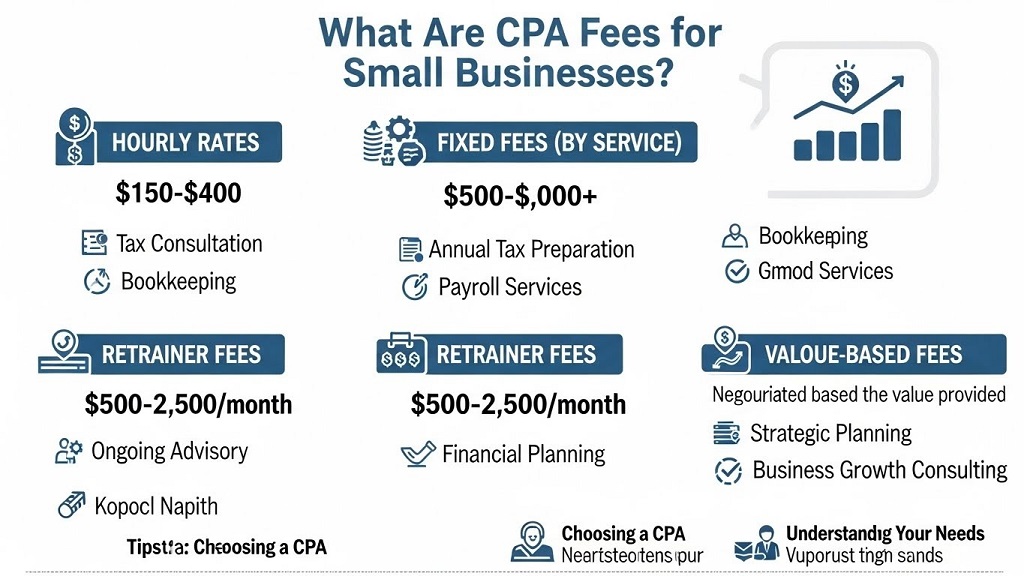
Short answer: Flat fees are more predictable. Hourly rates are better for one-time or advisory work.
CPA Hourly Rates
- Best for consultations and short-term projects
- Ranges from $150–$450/hour
- Harder to budget long-term
Flat or Monthly Fees
- Best for ongoing bookkeeping and compliance
- Predictable monthly costs
- Often include tax planning and reporting
Most growing small businesses choose monthly CPA packages to avoid surprise bills.
What CPA Services Are Included in the Cost?
Short answer: CPA fees cover more than tax filing. They support compliance, accuracy, and decision-making.
Typical services include:
- Bookkeeping and bank reconciliation
- Payroll processing and payroll tax filing
- Sales tax compliance
- Quarterly estimated tax planning
- Year-end financial statements
- Business tax return preparation
Higher-tier packages may include cash flow forecasting, audit support, and CFO-level advice.
How Do CPA Fees Compare to Hiring an In-House Accountant?
Short answer: CPAs cost less than hiring full-time staff for most small businesses.
Comparison:
| Option | Annual Cost |
|---|---|
| In-House Accountant | $55,000 – $75,000+ |
| Outsourced CPA | $3,000 – $15,000 |
For businesses under $10M in revenue, outsourcing delivers compliance without payroll overhead.
Can CPA Fees Help Reduce Taxes and Penalties?
Short answer: Yes. CPA fees often pay for themselves through tax savings and risk reduction.
Case example: A service-based LLC earning $250,000 annually hired a CPA for $4,200/year. Through entity restructuring and depreciation strategies, the CPA reduced tax liability by $11,300.
That’s a 169% return on CPA fees.
When Should a Small Business Hire a CPA?
Short answer: Hire a CPA when revenue exceeds $50,000 or compliance becomes time-consuming.
Clear signals include:
- Hiring employees or contractors
- Falling behind on bookkeeping
- Receiving IRS or state notices
- Expanding into new states
- Planning for growth or funding
Waiting too long often increases total CPA costs due to cleanup work.
How Can Small Businesses Lower CPA Fees?
Short answer: Stay organized and use accounting software correctly.
- Reconcile accounts monthly
- Use cloud accounting tools
- Separate personal and business expenses
- Submit documents on time
Clean books reduce hourly work and lower average CPA cost.
Conclusion: Are CPA Fees Worth It for Small Businesses?
CPA fees for small business are not just an expense. They are a safeguard. They protect you from penalties, missed deductions, and poor financial decisions.
The average CPA cost varies, but the value comes from accuracy, compliance, and clarity. Most small businesses spend less than 2% of revenue on accounting—and avoid far larger losses.
Call to Action: If you’re guessing your numbers or stressing during tax season, it’s time to speak with a CPA. Get clarity now before small issues become expensive problems.
Frequently Asked Questions (FAQs)
What is the average CPA cost for a small business?
The average CPA cost ranges from $1,500 to $15,000 per year depending on services and complexity.
Are CPA hourly rates better than monthly fees?
Hourly rates work for short projects. Monthly fees are better for ongoing accounting and budgeting.
Do CPA fees include tax filing?
Some packages include tax prep. Others charge separately. Always confirm in advance.
Can a CPA help reduce my tax bill?
Yes. CPAs identify deductions, credits, and entity strategies that lower taxes legally.
Is hiring a CPA required for small businesses?
No, but it becomes essential as revenue grows and compliance increases.
How often should I meet with my CPA?
At least quarterly for tax planning and financial review.
Related Topics: Four Essentials for Every DIY Painter And Decorator
Related Topics: Open Kitchen Layout vs Closed: Which is Better