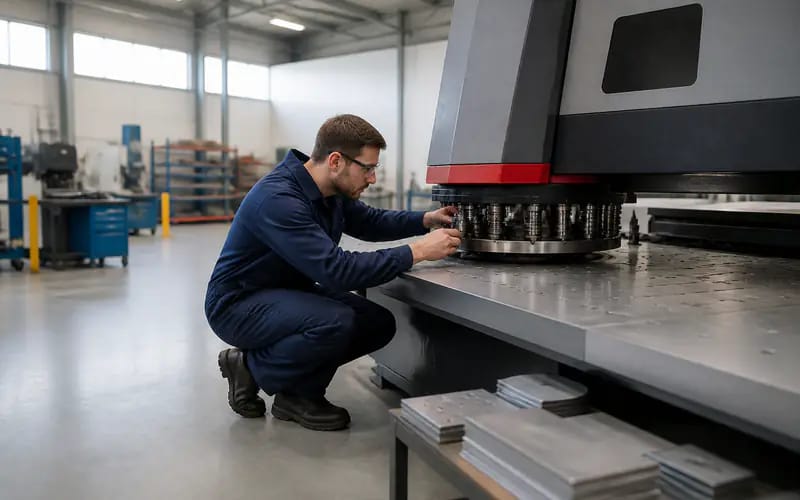
The CNC Punching Machine is a machine that is subject to considerable stress and use throughout the day. By knowing what to look for and how often, you can stop minor problems from causing long periods of time losing production.
Daily Checks Before Start-Up
Make sure all tooling stations are properly seated for the sheets that will be cut throughout the day. Make sure the air pressure gauge is reading in the manufacturers specified range for normal operation (5.5-6.5 bar for example). Also make sure the levels of lubricant in the turret rotation points, and ram body, are adequate for the days operation. This will only take a couple of minutes to complete and can highlight any potential problems before they become major faults such as a punch breaking or sheets not cutting properly due to jamming.
Weekly Tasks To Stay On Top Of
Grease the stations on the turret for the turret’s rotation and for the ram’s retraction. Check the slug chute for build up of swarf from previously punched parts and sweep out the bed area to prevent scratching of newly punched parts. Check punch-to-die clearance on the heaviest used stations to identify any wear and take action before the wear causes burred edges to newly punched parts.
Monthly Checks For The Ram And Hydraulics
The ram and hydraulic system of your punching machine need to be checked on a regular basis. This should include a check on the ram’s alignment to the bed to ensure it is still travelling in a square line. Also check the stripper plate for signs of wear, as a worn stripper can cause the sheets to lift on the punch stroke resulting in poor hole quality. Check the hydraulic oil level and condition and top up as required. Also check the clamps and guides for any sign of movement.
Quarterly Work Worth Scheduling
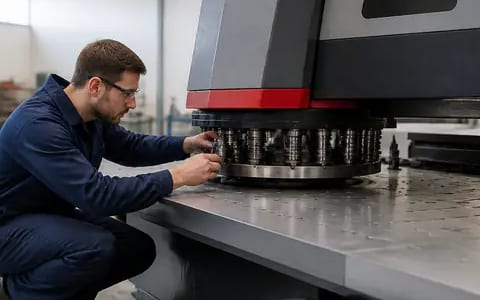
Hydraulic filters should be changed every three months. Although they may indicate a problem through a warning light on the machine prior to failure, they can restrict flow severely prior to failure. Pneumatic hoses should also be checked for signs of damage or leakage, particularly at connections that flex with the turret. The access to the control panel and main electrical switching gear should be cleared of dust on a regular basis. This will help to prevent unnecessary shutdowns for trivial reasons as well as preventing local overheating in shop environments that are hot. Backlash on the X and Y axes of movement should also be checked and adjusted as necessary. A small amount of play here and there can cause position errors on completed parts over time.
The Annual Service
An Annual Service covers: Inspect bearings on ram and turret drive. Check and Calibrate ballscrews and linear guides on axes. Check and Test Turret for accurate Indexing of all Stations. Safety Interlocks and Protective Guarding checked to ensure full compliance with Work Equipment Regulations, and that machinery is being maintained in efficient working order. Recommendation: This work is to be carried out by a competent Engineer, and booked well in advance as they are normally busy.
Warning Signs Between Services
Monitoring how your machine is performing can highlight small problems before they turn into a major incident. New noises from the turret or ram, burring on punch corners that wasn’t there last month, and an increase in cycle times for no apparent change in material or job setup are all signs that something needs looking at quickly. A poorly performing turret can display symptoms such as hesitating between stations and occasionally searching for a position before coming to rest.
How Shift Patterns Change The Schedule
This depends greatly upon material thickness and machine usage during the shift. Mild steel punched on a 6mm thickness running two shifts a day is a very different machine to occasional aluminium punching of 1mm material. The increased use of the machine with greater material thickness will cause faster wear of punches and dies, faster breakdown of hydraulic oil, and increased possibility of backlash to develop. Lighter usage can stretch the longer time frames between checks but these should be determined by actual machine usage.
What A Tiered Schedule Looks Like In Practice
Using Cotswold Machinery Punching Machines in your workshop is typical of many other users, in that they organise their maintenance into a ‘tiered’ schedule, with daily operator checks, weekly operator/maintenance checks and monthly/quarterly/annual checks by a qualified engineer who logs what has been done and when. The written log of what maintenance has been done is also evidence of when maintenance was carried out should a breakdown occur or if subject to a regulatory inspection.
Most problems that could develop into major problems within a short space of time will be highlighted as part of the daily checks, therefore avoiding potential costly repairs and a lost day of production.
Related posts:

Navigating the Cloud Frontier: Overcoming Retail Industry Challenges in Cloud Migration

5 Key Ways to Prepare for Business Meeting

Great American Franchise Expo Denver 2026: Dates, Tickets, and Schedule

Top Tips and Advice For Reputation Management

How to manage risks like a professional trader

How Custom Fabricators Enhance Product Development

MLMs vs. Affiliate Marketing: Which Online Business Model Suits You?