
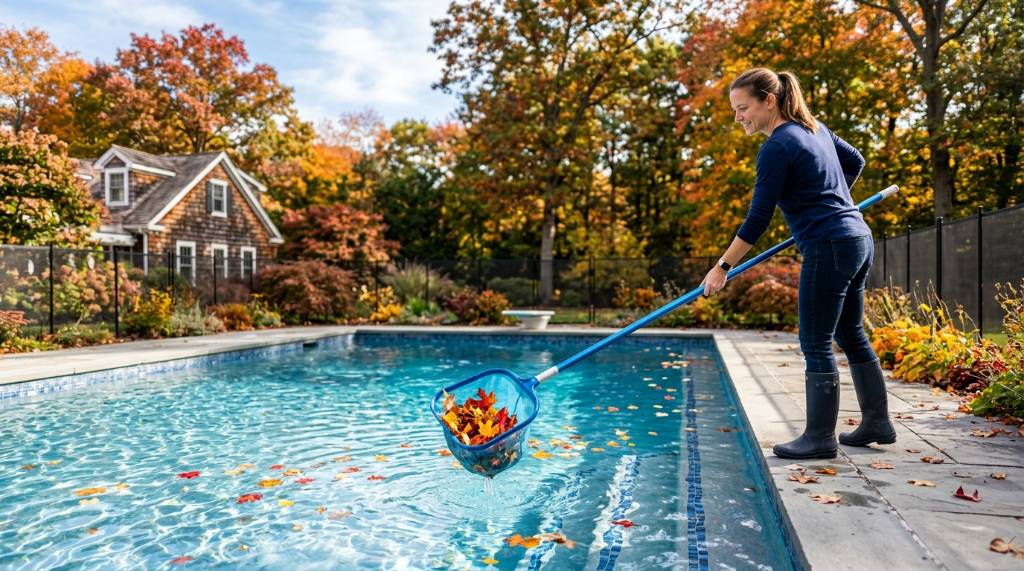
A single October weekend in Westchester can drop more leaves into an uncovered pool than most homeowners see in an entire summer. Add spring pollen, grass clippings from nearby mowing crews, and the occasional storm that drags twigs and seeds into the water, and New York pool owners face a debris problem that runs from April through November. Leaving that material to sink and decay doesn’t just look bad — it feeds algae and throws off your chlorine demand. Many owners dealing with this cycle for the first time read the Enhulk pool cleaner review to see whether a cordless robotic vacuum is worth adding to their routine. Here’s how to stay ahead of the mess.
Quick Answer
Skim the surface daily during heavy leaf-drop periods, empty skimmer baskets before they clog, and remove sunken debris with a vacuum or robotic cleaner before it breaks down. In New York, the biggest debris windows are mid-October through November (leaf fall) and April through May (pollen and storms). A cover during off-season and a robotic cleaner during the season cut manual work dramatically. Never let leaves sit on the pool floor for more than a day or two — tannins and organic decay stain plaster and spike chlorine demand.
Key Takeaways
- New York’s debris season runs roughly April through November, peaking during fall leaf drop and spring pollen.
- Surface skimming and skimmer basket checks prevent most debris from ever reaching the pool floor.
- Organic debris consumes chlorine as it decays, so removing it fast is a water-chemistry issue, not just a cosmetic one.
- A robotic or cordless cleaner handles sunken leaves and fine silt that manual vacuuming misses.
- An off-season cover is the single most cost-effective way to keep leaves out of a New York pool.
Why Organic Debris Is a Bigger Problem Than It Looks
Leaves, grass clippings, pollen, and seeds don’t just float around looking untidy. As they break down, they release tannins that can stain plaster and liners, and they create a steady demand for chlorine. That means your sanitizer gets used up fighting decomposition instead of keeping the water safe. A pool that stays full of leaves for a week can go from clear to cloudy to green surprisingly fast, especially during warm, humid stretches common in the New York metro area.
Fine organic particles also slip past skimmer baskets and sand filters more easily than most people expect. That’s why pools with heavy tree cover often need both mechanical removal (skimming, vacuuming) and chemistry adjustments (shocking, algaecide) rather than just one, Want to keep your indoor air just as fresh as your outdoor pool? $\to$ find a quiet air purifier that cleans large rooms efficiently
New York’s Debris Calendar: When the Worst Hits
Debris in New York pools follows a predictable pattern, and knowing it helps you schedule maintenance instead of reacting to it:
- April–May: Pollen season. Fine yellow-green dust coats surfaces and clogs filters quickly. Storms also drop twigs and buds.
- June–August: Grass clippings, flowers, and seeds from nearby landscaping. Storm runoff brings in more.
- September: Early leaf drop from stressed trees. Often overlooked because it doesn’t look like “fall” yet.
- October–November: Peak leaf season. This is when most New York pools accumulate the heaviest organic load.
- December–March: Off-season. Without a cover, wind blows debris in all winter, and it sits and decays until spring opening.
If your pool sits near maples, oaks, or sycamores, expect two to three weeks in late October where daily skimming is non-negotiable.
The Core Routine: Skim, Empty, Vacuum, Balance
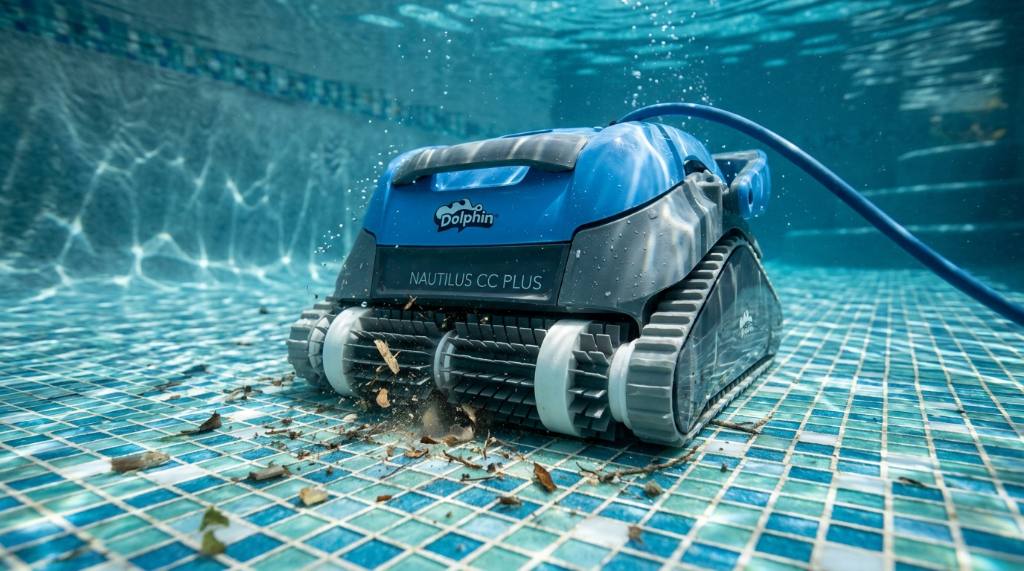
There’s no single tool that solves this. The most reliable approach combines four steps in a consistent loop.
1. Surface Skimming (Daily or Every Other Day)
Use a leaf skimmer or leaf rake attached to a telescoping pole. Work from the deep end toward the shallow end so debris doesn’t get pushed back into the water. A flat skimmer net handles pollen and small debris; a deeper leaf rake with a bag is better for large leaves and twigs.
2. Empty Skimmer and Pump Baskets
Check skimmer baskets before you do anything else. A clogged basket reduces circulation, which lets debris sink instead of getting pulled into the filter. In peak fall, this can mean emptying baskets twice a day. Pump baskets often get ignored — a blocked pump basket strains the motor and can lower flow enough that the pool stops filtering properly.
3. Remove Sunken Debris
Leaves that make it to the floor need to come out before they break down. Options include:
- Manual vacuum: Effective but slow, especially on large pools with heavy leaf load.
- Automatic suction-side cleaner: Runs part of the time but can clog on large leaves.
- Pressure-side cleaner: Handles bigger debris but needs a booster pump on many setups.
- Robotic or cordless cleaner: Independent of the pool’s pump, usually with its own debris basket, and convenient for routine cleaning.
For most New York owners with at least a few trees nearby, a dedicated robotic cleaner pays for itself in saved time during October and November alone. Matching the cleaner to your debris type matters more than brand — a unit designed for fine silt may struggle with wet maple leaves, and vice versa.
4. Rebalance Water Chemistry
After heavy debris removal, test chlorine, pH, and alkalinity. Organic decay lowers pH over time, and free chlorine gets consumed quickly. A shock treatment after a big cleanup is standard practice. Algaecide helps prevent blooms that follow nutrient spikes.
Tools Compared: What Actually Helps in a New York Pool
The right tool depends on your debris type, pool size, and how much time you’re willing to spend. Here’s a practical breakdown of the common options:
| Method | Best For | Main Limitation | Effort Level |
|---|---|---|---|
| Hand skimmer / leaf rake | Surface leaves, floating debris | Doesn’t reach sunken debris | Moderate, daily |
| Skimmer / pump baskets | Preventing circulation clogs | Needs frequent emptying in fall | Low, but frequent |
| Manual vacuum | Targeted cleanup of sunken debris | Slow, tiring on large pools | High |
| Suction-side automatic cleaner | Regular maintenance cleaning | Clogs on large leaves | Low, but dependent on pump |
| Pressure-side cleaner | Heavy debris, larger pools | Requires booster pump, more expensive | Low |
| Robotic / cordless cleaner | Sunken leaves, silt, routine cleaning | Upfront cost, needs charging or power | Very low |
Most New York pool owners end up combining two or three of these rather than relying on one. Skimmer + robot + seasonal cover is a common, efficient stack.
Covers: The Cheapest Long-Term Fix
If your pool sits under or near trees, a cover is the most cost-effective debris control you can buy. Options vary:
- Solid covers: Best at blocking debris and light, but require pumping off standing water and are heavy to handle.
- Mesh covers: Lighter and let water drain through, but fine debris still sifts in.
- Automatic covers: Convenient for frequent users, higher upfront cost.
- Solar blankets: Reduce evaporation and heat loss but don’t stop debris.
For seasonal closing from October through April, a solid or mesh safety cover makes spring opening far easier. During the swim season, a solar blanket at least keeps some surface debris off, though it won’t replace skimming.
Common Mistakes New York Pool Owners Make
- Waiting until the pool looks bad. By then, tannins have stained and algae has started.
- Letting leaves sit on the bottom “for later.” Even a few days of decay can spike chlorine demand and stain plaster.
- Skipping winter covering. Spring openings become twice the work.
- Over-relying on the filter. Filters are not designed to handle bulk leaves — they clog and lose efficiency.
- Ignoring chemistry after cleanup. Removing debris is only half the job; rebalancing is the other half.
- Buying a cleaner without matching it to debris type. Fine silt and large wet leaves need different designs.
Building a Realistic Weekly Schedule
During peak debris season, a sustainable rhythm looks like this:
- Daily: Skim surface, empty skimmer basket.
- Every 2–3 days: Run robotic or automatic cleaner; check pump basket.
- Weekly: Test chlorine, pH, alkalinity; backwash or clean filter as needed.
- After storms: Skim, empty baskets, vacuum, and shock if debris was heavy.
- End of season: Full cleanup, chemistry balance, and cover installation.
Adjust frequency based on tree density. A pool under two large maples needs the daily skim; a pool in an open yard may only need it a few times a week.
Frequently Asked Questions
How often should I skim my pool in the fall in New York?
During peak leaf drop in October and November, skim daily — sometimes twice a day on windy days. In lighter debris periods, every other day is usually adequate.
Can leaves on the bottom of the pool cause damage?
Yes. As leaves decay, they release tannins that stain plaster and liners, consume chlorine, and feed algae. The longer they sit, the more chemistry correction is needed afterward.
Is a robotic pool cleaner better than manual vacuuming?
For routine cleaning, robots save significant time and run independently of the pool’s pump. Manual vacuuming still has a place for targeted, heavy debris removal that robots may miss.
Do I need a pool cover in New York?
If your pool is near trees, a cover dramatically reduces the debris load and makes spring opening easier. Even a basic mesh or solar cover helps, though solid covers offer the best protection.
Why does my chlorine drop after a lot of leaves fall in?
Organic debris consumes free chlorine as it breaks down. Removing the debris quickly and shocking the pool afterward restores the chlorine balance.
What’s the biggest debris problem in spring for New York pools?
Pollen and post-storm debris. Fine pollen coats surfaces and clogs filters fast, while spring storms blow twigs and buds into the water.
Conclusion
Dealing with leaves and organic debris in a New York pool is less about any single tool and more about consistency. Skim daily during peak season, keep baskets clear, remove sunken debris before it decays, and rebalance chemistry after every heavy cleanup. Pair that routine with an off-season cover and an automatic cleaner matched to your debris type, and the workload drops substantially. Start with the daily skim — it’s the cheapest habit that prevents the most expensive problems.

