

Selling a business is one of the biggest decisions you will ever make. It takes time, careful planning, and a lot of paperwork. However, many sellers underestimate just how important the right documents are. Buyers need to trust what they are buying. Therefore, the documents you prepare will either open doors or close them. This guide walks you through every step, from getting your business ready to handing over the keys.
Why Preparation Matters Before You List Your Business
Most business sales fail not because the business is bad, but because the seller was not ready. Buyers do their homework. They hire accountants and lawyers. They dig into every number. Additionally, they ask hard questions. If you cannot answer them quickly and clearly, buyers lose confidence.
Preparation also helps you get a better price. A business with clean records and clear documentation looks more valuable. It signals professionalism. Therefore, start preparing at least 12 to 24 months before you plan to sell.
Understanding What Buyers Really Look For
Before you gather a single document, put yourself in the buyer’s shoes. They want to know three things: is the business profitable, is the profit sustainable, and are there any hidden risks? Every document you prepare should answer one of these questions.
Buyers also look for consistency. They want to see that your numbers match your story. For instance, if you say revenue has grown every year, your financials should confirm that. Any gap between what you say and what the documents show will raise red flags immediately.
The Core Financial Documents You Must Prepare
Financial documents are the heart of any business sale. Without them, the deal simply does not move forward. Here are the key documents every buyer expects to see.
Profit and Loss Statements
Provide at least three years of profit and loss statements. These show your income, expenses, and net profit over time. Buyers use these to judge how healthy the business is. Make sure your numbers are accurate and prepared by a qualified accountant.
Balance Sheets
A balance sheet lists everything the business owns and everything it owes. Buyers want to see a strong asset base and manageable liabilities. Additionally, any outstanding debts must be clearly disclosed. Surprises after the deal is signed can kill the transaction entirely.
Cash Flow Statements
Cash flow statements show how money actually moves through the business. A business can look profitable on paper but still struggle to pay its bills. Therefore, buyers pay close attention to operating cash flow. Positive, consistent cash flow is one of the strongest selling points you can offer.
Tax Returns
Business tax returns for the last three to five years are essential. They serve as an independent verification of your financial statements. Buyers and their advisors will compare your tax returns to your profit and loss statements. Any discrepancies will require a clear explanation.
Legal Documents That Protect Both Parties
Financial records are only part of the story. Legal documents give buyers confidence that the business is properly structured and that ownership can transfer without problems. However, assembling these documents often takes longer than sellers expect. Start early.
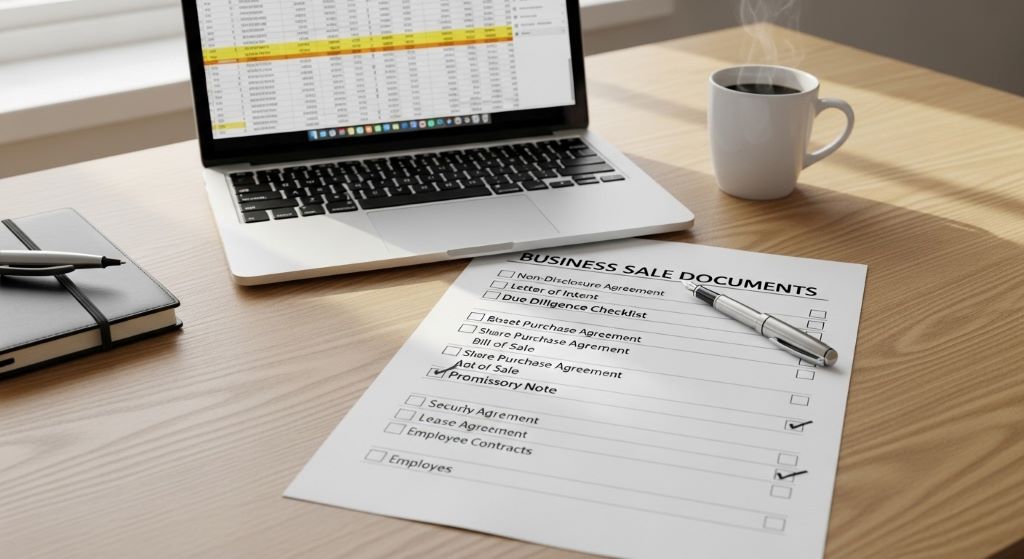
The key legal documents you should prepare include:
- Business registration and incorporation certificates
- Ownership agreements and shareholder records
- Any patents, trademarks, or intellectual property registrations
- Lease agreements for property or equipment
- Licenses and permits required to operate the business
Additionally, if your business has any pending lawsuits or legal disputes, disclose them upfront. Trying to hide legal issues never works. Buyers will find them during due diligence, and the discovery will damage trust severely.
Operational Documents That Show How the Business Runs
Many buyers, especially first-time owners, are buying a way of life as much as a business. They want to know how the business operates day to day. Operational documents answer that question. They also show that the business can run without you, which is a major selling point.
Consider preparing a standard operating procedures manual. This document outlines how tasks are completed, who is responsible for what, and how problems are handled. Furthermore, an organisational chart showing staff roles and reporting lines helps buyers understand the team structure quickly.
Employee contracts and HR records are also important. Buyers want to know whether key staff are likely to stay after the sale. High staff turnover or the loss of a key employee can significantly affect the business value. Therefore, identify your key employees early and consider retention strategies.
Customer and Supplier Information Buyers Want to See
Revenue comes from customers, and products come from suppliers. Buyers want to understand both sides of that equation. However, you do not always need to reveal specific customer names before a deal is close to being signed. A confidentiality agreement should be in place first.
Instead, provide a summary of your customer base. Show how revenue is distributed. For example, if one customer accounts for 60 percent of your income, buyers will see that as a concentration risk. Therefore, diversifying your customer base before you sell will improve your position.
Supplier contracts are equally important. Buyers need to know that supply agreements will transfer with the sale. If a key supplier contract is tied to you personally, that needs to be resolved before the sale can close smoothly.
How to Value Your Business Before Going to Market
Knowing what your business is worth is essential before you approach buyers. There are several common valuation methods. The most widely used for small businesses is a multiple of earnings. This means taking your annual profit and multiplying it by an industry-specific number.
However, valuation is not a one-size-fits-all exercise. Different industries use different multiples. A technology company may command a higher multiple than a local retail store. Therefore, consult a business broker or valuation specialist to get an accurate figure.
Having a formal valuation report also adds credibility. It shows buyers that your asking price is not a number you plucked from thin air. Additionally, it gives you a stronger foundation when negotiations begin.
The Role of a Business Broker and When to Use One
A business broker acts as a middleman between you and potential buyers. They help market the business, screen buyers, and manage the negotiation process. For many sellers, using a broker is well worth the commission they charge.
Brokers also know what buyers expect to see. They can identify gaps in your documentation before you go to market. Furthermore, a good broker maintains a network of qualified buyers, which can significantly reduce the time it takes to find the right match.
That said, not every business needs a broker. If you already have a potential buyer in mind, or if the business is small, you may be able to manage the process yourself with the help of a solicitor and accountant.
Navigating the Due Diligence Process Successfully
Due diligence is the stage where buyers inspect everything in detail. It is thorough, time-consuming, and often stressful. However, if you have prepared well, it does not have to be painful.
Organise all your documents in a virtual data room. This is a secure online space where buyers and their advisors can review files. Group documents into clear categories such as financial, legal, operational, and human resources. Additionally, make sure everything is clearly labelled and easy to find.
Respond to requests promptly. Delays during due diligence signal disorganisation. Buyers may start to wonder what else is being hidden or neglected. Speed and transparency build trust. Therefore, aim to respond to every query within 24 to 48 hours.
Negotiating the Sale Agreement and Final Steps
Once due diligence is complete, both parties move toward a formal sale agreement. This document outlines the purchase price, payment terms, transition period, and any warranties. It is a complex legal document, and you should not sign it without proper legal advice.
Negotiate the transition period carefully. Many buyers want the seller to remain involved for a period after the sale. This helps them learn the business and maintain relationships with key clients and staff. However, make sure this arrangement has a clear end date and is properly compensated.
Additionally, think about what happens to your employees. Will the buyer keep them on? What redundancy obligations exist? Addressing these questions early avoids disputes after completion.
Conclusion
Selling a business successfully comes down to preparation and transparency. Buyers want to see clean financials, solid legal documents, and clear operational records. Additionally, they want a business that can run without its current owner.
Start preparing at least 12 to 24 months before you plan to sell. Get your accounts in order, resolve any legal issues, and document how your business operates. Furthermore, consider working with a business broker, accountant, and solicitor to guide you through the process.
A well-prepared seller attracts serious buyers and achieves a better price. Therefore, invest the time now to get everything in order. The effort you put in before the sale will pay dividends when you reach the closing table.
Frequently Asked Questions
1. How long does it take to sell a business?
The average business sale takes between six months and two years. The timeline depends on the size of the business, how prepared the seller is, and how quickly a suitable buyer is found. Additionally, due diligence and legal negotiations can extend the process by several months.
2. What documents do I need to sell my business?
The core documents include three years of financial statements, tax returns, a balance sheet, cash flow statements, legal registrations, employee contracts, lease agreements, and customer and supplier contracts. Additionally, a business valuation report and an information memorandum are highly recommended.
3. Do I need a business broker to sell my business?
A broker is not always necessary, but they can add significant value. They bring buyers to the table, manage confidentiality, and help you get a fair price. However, if you already have a willing buyer or the business is very small, you may choose to manage the process yourself with professional support.
4. How is a business valued for sale?
Most small businesses are valued using a multiple of earnings, often referred to as EBITDA. The multiple varies by industry, growth rate, and risk level. Asset-based and market comparison methods are also used. Therefore, it is best to hire a professional valuator to determine the most accurate and defensible price.
5. What happens to employees when a business is sold?
In most cases, employees transfer to the new owner under existing terms and conditions. However, this depends on local employment laws and the structure of the sale. If the buyer is not retaining all staff, redundancy payments may be required. Additionally, open communication with your team throughout the process helps maintain morale and productivity.
Related Topics:
What does choosing the right accounting firm in the USA really mean?
Pricing Transparency, Message Deliverability, and Scalability

